






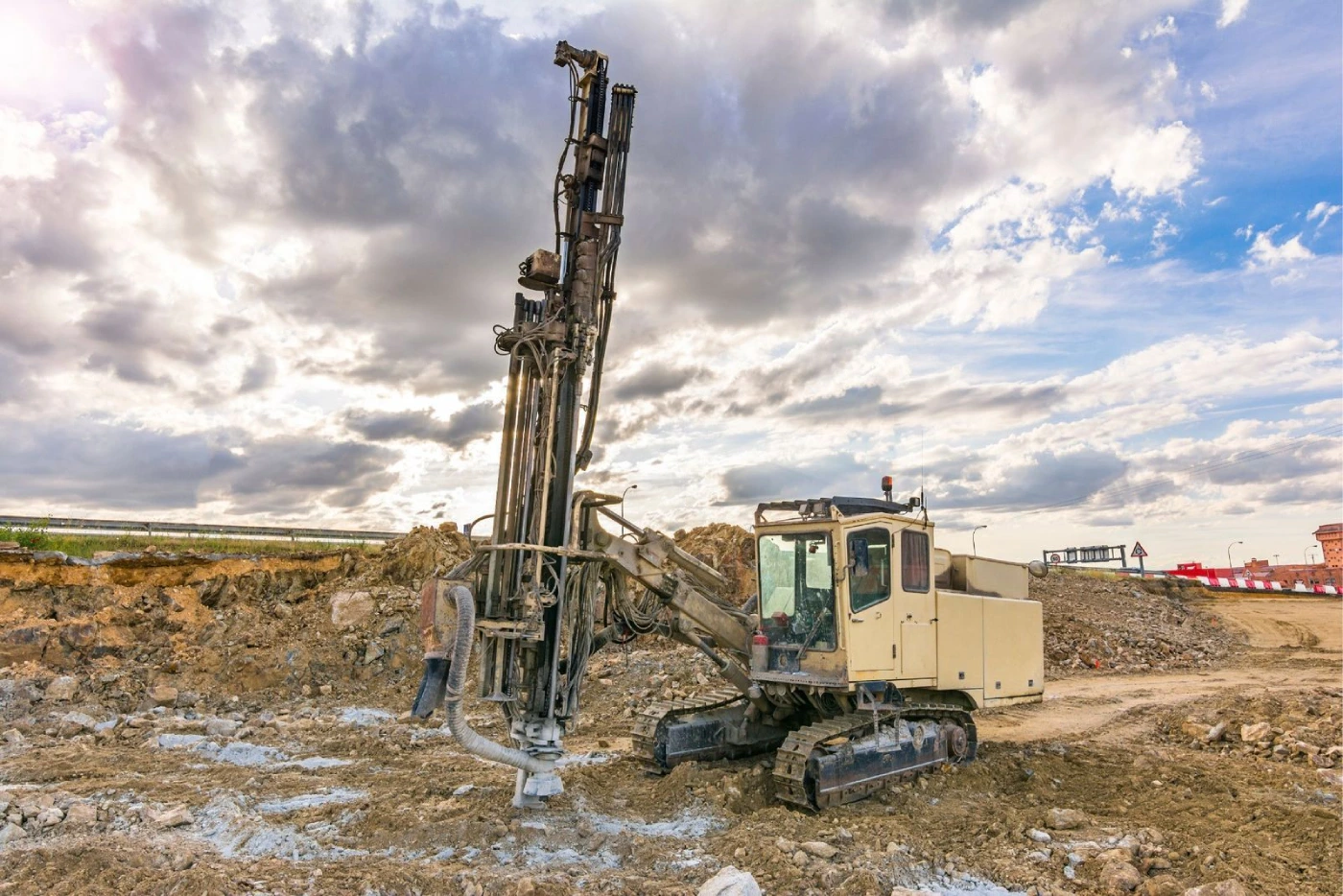
Geotechnical drilling is the specialised drilling undertaken to investigate soil, rock, and groundwater conditions that influence construction design, environmental risk, and site feasibility. It provides critical subsurface data for engineers, environmental consultants, and developers.
Geotechnical drilling is the controlled drilling and sampling of subsurface materials to characterise soil and rock properties, assess geotechnical stability, and inform the design of foundations, retaining structures, excavations, and remediation works. It supports both engineering design and environmental assessment, particularly on sites with contamination or complex ground conditions.
Geotechnical drilling is essential for understanding the physical behaviour of the subsurface, which directly affects construction safety, structural performance, and environmental compliance. Without reliable drilling data, project teams face increased risks, including design failures, unexpected ground conditions, cost overruns, and construction delays.
Key reasons geotechnical drilling matters include:
Geotechnical drilling also overlaps with environmental drilling, particularly on brownfield sites where both geotechnical and environmental samples must be obtained concurrently.
Geotechnical drilling is typically undertaken during planning, design, or early construction stages to inform engineering decisions and risk assessments. Common triggers include:
Councils and planning authorities often require geotechnical investigations to support structural design, stormwater plans, or excavation risk assessments.
Road, rail, energy, and utilities projects require extensive drilling to map subsurface conditions along construction corridors.
Drilling informs foundation selection, footing design, slab performance, retaining walls, and deep excavation support systems.
Where contamination intersects with geotechnical considerations—such as groundwater flow, soil permeability, or excavation feasibility—drilling provides essential data and sampling access.
Installation of monitoring wells and groundwater extraction bores often begins with geotechnical drilling to characterise aquifer conditions.
Sites subject to landslip risk, erosion, or settlement require drilling to support stability modelling.
Nova Group Pacific provides integrated geotechnical and environmental drilling programs, ensuring high-quality data that supports compliant, risk-aware design and remediation.
Our multidisciplinary services include:
Explore related glossary entries to build your understanding of subsurface investigations:
Whether you need site assessment, remediation, or environmental consulting, our expert team is here to guide your project from planning to completion with precision and care.
Whether you're early-stage or ready to build, this tool helps you work out what reports you need — and how to bundle them into a single site visit.
Fast. Free. Custom to your stage.


We provide sustainable contaminated land, remediation, and geotechnical consulting services across Australia.


.jpeg)
.jpeg)


