







Managing a development project means coordinating dozens of moving parts. Geotechnical construction support is one that is easy to underestimate, until something goes wrong on site.
Most developers understand that a geotechnical investigation happens before construction begins. What is less widely understood is that geotechnical engineering involvement does not stop when the builder arrives. Specialist services verify that what gets built matches the geotechnical design — and that the ground beneath performs as expected throughout the construction programme.
For developers, these services protect programme, budget, and liability. For project managers, they provide the hold points, certifications, and documented evidence that satisfy lenders, certifiers, and councils at each critical stage.
This guide covers what each service is, when it applies, and why skipping them typically costs far more than engaging them.
Why Construction Support Matters
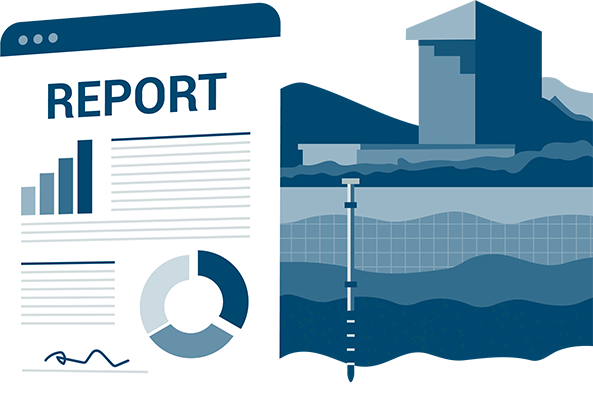
A geotechnical report tells you what the ground is like and how to build on it — covering soil classification, bearing capacity, groundwater, and geotechnical design recommendations. Construction support confirms the build follows that advice. It also responds when conditions differ from what the investigation found. This is where geotechnical monitoring and instrumentation become essential — providing the real-time data that keeps construction on track.
Ground conditions vary. A borehole samples one location at one point in time. When excavation opens the full site footprint, the soil profile often differs from location to location. Fill appears where it was not expected. Rock varies in depth. Groundwater emerges where it was not detected. Without someone on site to assess variations in real time, construction proceeds on assumptions that may no longer hold.
Construction support also creates a defensible record. Inspection reports, verification certificates, and monitoring data document that work met the required standard. Each stage has its own record. That documentation protects developers from future liability, satisfies planning conditions, and gives financiers the confidence they need to release funds.
Earthworks Inspection and Verification
What it is
Earthworks inspection and verification confirms that filling, compaction, and ground preparation meet the project specifications. Before any slab, pavement, or structure is founded on prepared ground, an engineer must verify that the subgrade is suitable.
Earthworks verification uses field density testing to confirm compacted fill achieves the specified relative compaction. Subgrade material also comes under scrutiny: its suitability, compaction lift thickness, and moisture conditions.
When you need it
Any project that involves importing fill, regrading the natural ground surface, or constructing embankments requires earthworks verification. Projects where the foundation level sits on compacted fill rather than natural ground all require it. Soil classification testing — identifying the material type and engineering properties — is often carried out alongside earthworks verification to confirm the fill meets the specification.
Without it, there is no documented basis for the fill's performance, and no protection if settlement occurs later.
Excavation Stability Assessment
What it is
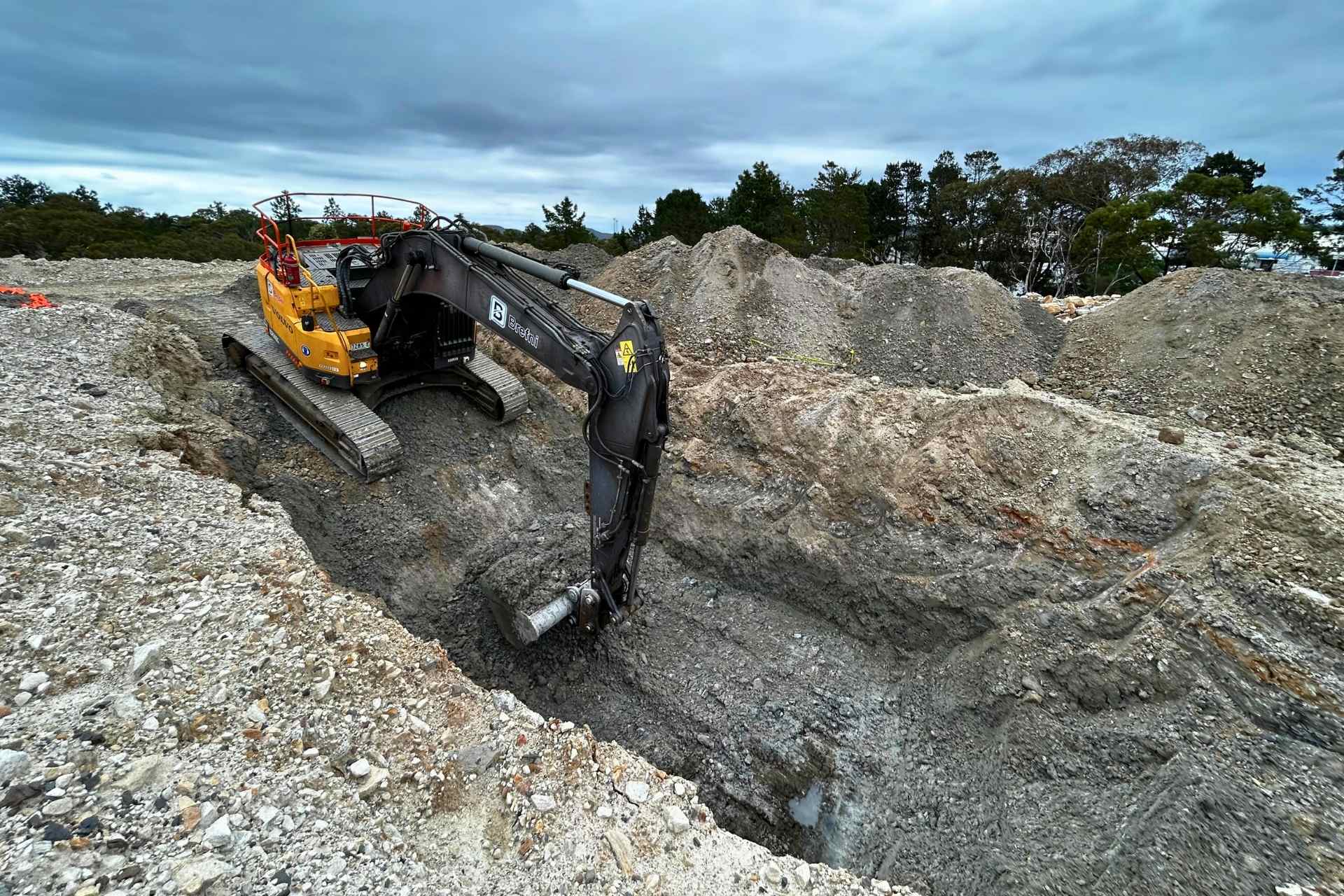
An excavation stability assessment evaluates the safety of open cuts, trenches, and excavations during construction. Before workers or equipment enter, an engineer assesses whether the walls are stable and flags any collapse risk.
It considers depth and geometry, soil type, groundwater, edge surcharge loads, and how long the cut stays open. Where instability is identified, the engineer recommends battering the walls, installing temporary shoring, or dewatering before work proceeds.
When you need it
Most Australian states require a formal assessment for excavations deeper than 1.5 metres where workers are present. In practice, any excavation near existing structures or in soft, saturated, or variable soils warrants professional assessment regardless of depth.
Excavation collapse is one of the most serious risks on any construction site. An assessment is not a regulatory formality — it is the basis for a safe method of work.
Temporary Shoring Design
What it is
Where site constraints, neighbouring structures, or cut depth prevent safe battering, temporary shoring holds the excavation walls in place. Shoring systems include sheet piles, soldier piles and lagging, hydraulic bracing, and soil nail walls, among others.
Temporary shoring design is a specialist engineering task. The designer calculates lateral earth pressures, selects the system type, and specifies sections, spacings, and installation details. Groundwater, surcharge loads from adjacent structures, and excavation sequence all factor into the design.
When you need it
Temporary shoring is needed whenever excavation walls need support to proceed safely. Common situations include basement excavations in urban areas and deep trenching beside existing buildings.
Completing the shoring design before excavation begins is essential. Designing it retrospectively — once an unsafe excavation is already open — compromises both safety and quality.
Foundation Inspections and Certification
What it is
Foundation inspections confirm that the founding conditions exposed during excavation match the conditions assumed in the structural design. A bearing capacity assessment — confirming the soil or rock at founding level can safely carry the structural loads — is the core engineering question the inspection answers. Before concrete is poured, the engineer inspects each excavation base and certifies it can carry the design loads.
Foundation certification is the formal record. It documents the founding level, material encountered, any design variations, and the engineer's sign-off to proceed.
When you need it
Foundation inspections apply to virtually every project. Residential footings, commercial slabs, pile caps, and retaining wall footings all need inspection before concrete goes in. Once the concrete is poured, that opportunity is gone permanently.
Lenders on construction-financed projects typically require foundation certification before releasing progressive drawdown funds. Many development application (DA) conditions also require certification of foundation works as a hold point before construction can proceed.
Level 1 and Level 2 Supervision
What it is
In Australian geotechnical practice, supervision levels define the degree of engineer involvement during construction of geotechnical elements. The level specified reflects the complexity of the geotechnical design and analysis underpinning the project. AS 4678 and related guidance documents define the classification.
Level 1 supervision involves periodic inspection by a geotechnical engineer at agreed hold points during construction. The engineer is not present continuously but attends at critical stages — founding condition inspections, or compaction testing verification.
Level 2 supervision requires continuous or near-continuous presence of a geotechnical engineer during the relevant construction activity. It applies where ground conditions vary significantly, where mistakes carry severe consequences, or where the method demands real-time judgement throughout.
When you need it
The appropriate supervision level depends on the complexity of the project and the variability of the ground conditions. A straightforward residential footing on a well-understood site may need only Level 1 at key hold points. A deep excavation beside heritage buildings or a piled foundation in variable ground may need Level 2 throughout.
The supervision level will be specified in the design documentation. Substituting Level 2 with periodic inspections transfers the risk of undetected ground variation to the developer.
Drilling Supervision
What it is
Drilling supervision means a geotechnical engineer or experienced technician attending during drilling. They log materials, direct the program in real time, and ensure samples are collected correctly.
On-site supervision of drilling is distinct from the later laboratory testing and report writing. Whether the drilling is geotechnical drilling for foundation or slope investigations, or environmental drilling for contamination assessment, the principle is the same — it captures information that cannot be recovered later: soil consistency, groundwater presence, core condition, and any unexpected conditions that emerge.
When you need it
Drilling supervision applies during geotechnical investigations, pile installation, and anchor drilling. It is also essential when installing groundwater monitoring wells or collecting groundwater sampling during environmental investigations — wherever the conditions encountered influence design or construction. Complex sites and projects where drilling data drives critical design decisions particularly benefit from it.
Piling Supervision and Pile Inspections
What it is
Piling supervision means a geotechnical engineer attending installation. They confirm each pile reaches the correct depth and set, the founding material meets the design, and equipment matches the specification.
Pile inspections are formal checks (dimensions, plumbness, reinforcement placement, and concrete quality) before the pile cap goes on. On some projects, integrity testing (low-strain dynamic testing) confirms piles are continuous and free of defects.
When you need it
Piling supervision and inspection apply to any project using bored piers, driven piles, or screw piles. This covers residential bored piers on difficult sites and commercial buildings on piled foundations.
Pile defects discovered after construction are extremely difficult and costly to rectify. Installation is the only reliable opportunity to catch and fix problems before they are buried.
Settlement Monitoring
What it is
Settlement monitoring tracks vertical movement of structures, ground surfaces, or embankments using survey marks, settlement plates, or electronic geotechnical instrumentation. It shows whether settlement is occurring, at what rate, and whether it stays within acceptable limits.
On soft ground sites, monitoring during and after construction confirms consolidation is proceeding as predicted. Adjacent to deep excavations, monitoring of neighbouring structures catches movement before it reaches a damaging threshold.
When you need it
It applies on embankments over soft soils, adjacent to deep excavations, and under structures on compressible ground. On sites where groundwater is a factor, settlement monitoring often runs alongside groundwater monitoring — tracking both vertical movement and water level changes through a network of monitoring wells. Planning or EPA conditions on projects near sensitive receptors commonly require it.
Working Platform Design
What it is
A working platform is the prepared ground surface on which piling rigs, cranes, and other heavy plant operate during construction. Designing a working platform means specifying the thickness and material of the prepared surface so the heavy plant operates without bearing failure or rutting.
Working platform design follows guidance documents such as the BRE publication Working Platforms for Tracked Plant and considers the ground bearing capacity, the plant loads, and the platform material properties.
When you need it
Working platform design is needed wherever a heavy tracked plant will operate over soft soils or made ground. Piling operations are especially critical — rig instability during lifting is a serious safety risk.
Pavement Design and Rehabilitation
What it is
Pavement design determines surface thickness and composition based on subgrade strength, traffic loading, and design life. Pavement rehabilitation assesses existing pavements and specifies the treatment needed to restore structural capacity: patching, overlay, or full reconstruction.
Both draw on CBR laboratory testing and structural modelling to reach a cost-effective design.
When you need it
Pavement design applies to any new road, car park, hardstand, or access way that will carry vehicular traffic. Pavement rehabilitation applies when existing pavements show distress (cracking, rutting, or edge failure) and need assessment before a maintenance decision is made.
Getting the design right at the outset is far cheaper than repairing a pavement that has failed prematurely through under-design.
Specialist Engineering Assessment
What it is
A specialist engineering assessment is a site-specific technical review. A qualified geotechnical or structural engineer addresses a problem that falls outside standard inspection or design activities. It may cover assessing an existing structure, investigating distress or failure, or providing an independent peer review.
When you need it
Specialist assessments arise when standard solutions do not apply — unusual ground conditions, unexpected problems, damaged structures, or regulatory requirements for independent review. They also arise in dispute resolution, insurance claims, or pre-purchase technical due diligence.
Environmental Management Plan
What it is
A Construction Environmental Management Plan (CEMP) identifies environmental risks associated with construction and sets out the controls and responsibilities that manage them. It covers erosion and sediment control, dust management, noise and vibration, groundwater protection, and waste management. Environmental monitoring programs sit within the CEMP framework — specifying how and when monitoring occurs, what triggers an escalation, and how data is reported.
The CEMP translates the findings of environmental risk assessments into practical, site-specific action. Updated as conditions change and risks emerge, it is a living document throughout the project.
When you need it
Most significant projects in Australia require a CEMP as a condition of development consent or DA approval. Even where it is not formally required, a documented CEMP protects the developer from regulatory action if an environmental incident occurs.
Environmental Risk Assessment and Environmental Risk Register
What it is
Environmental risk management (ERM) is the overarching process of identifying, assessing, and controlling environmental risks throughout a project. An environmental risk assessment identifies the specific hazards, evaluates their likelihood and consequence, and determines the controls needed to reduce risk to an acceptable level. The results go into an environmental risk register — tracking each risk, its controls, the responsible party, and review status.
The risk register is a practical management tool, not simply a planning document. On well-run projects, the register is reviewed regularly and updated as risks or controls change.
When you need it
They apply to any project that could affect neighbouring properties, waterways, air quality, or sensitive ecosystems. Planning conditions or environmental licences often require them, and they are standard on major development and infrastructure projects.
Construction Verification
What it is
Construction verification formally confirms that completed work meets the design and specification requirements. It goes beyond inspection — the engineer reviews records, test results, and certificates to confirm every critical element is properly completed. For projects involving earthworks or ground improvement, this process follows a site validation protocol — a pre-agreed procedure specifying exactly how verification will be carried out and what constitutes an acceptable outcome.
The geotechnical engineer of record typically carries it out at the end of each construction phase. The output is a validation report: a formal document that goes to the certifier, council, or lender as evidence the works meet the required standard.
When you need it
Construction verification applies at the end of each geotechnical phase: earthworks, foundations, piling, shoring removal, and so on. It is a regulatory requirement on many projects and a standard deliverable on projects with construction loan financing.
Summary: Matching Services to Project Stage
Understanding which service applies at which stage helps you plan ahead and avoid last-minute delays:
- Before construction, earthworks verification planning, working platform design, temporary shoring design, and a CEMP all need to be in place.
- As excavation proceeds, stability assessments, drilling supervision, and settlement monitoring of adjacent structures all become active.
- During foundation works, foundation and pile inspections run alongside Level 1 or Level 2 supervision.
- As structural works complete, construction verification and foundation certification formally close out each phase.
Throughout construction, the environmental risk register should stay active and the CEMP updated as conditions change.
Work With a Geotechnical Team That Stays With Your Project
The best project outcomes come from consistent geotechnical involvement — the same engineers who investigate your site, produce the geotechnical design, and then support construction through to final verification. That continuity means faster responses when unexpected conditions arise, clearer accountability at every stage, and a complete documentary record that satisfies lenders, certifiers, and regulators.
Nova Group Pacific provides the full range of geotechnical construction support services for commercial, infrastructure, and residential development projects across New South Wales, Queensland and Victoria. From earthworks verification and foundation inspections through to settlement monitoring, piling supervision, and construction certification, our engineers are on site when you need them.
Contact us to discuss your project's construction support requirements.
This article provides general information only. Geotechnical construction support requirements vary by project type, ground conditions, and applicable state regulations. Always engage a qualified geotechnical engineer for advice specific to your project.