Article Summary
Reactive clay soil in Australia can expand and shrink as moisture changes, causing movement beneath buildings. However, with the right geotechnical investigation, AS 2870 site classification, and foundation design, you can safely build on reactive clay soils and reduce the risk of cracking, slab movement, and structural damage.
Introduction
Building on reactive clay soil in Australia requires careful planning, accurate site assessment, and appropriate engineering design. Expansive soils are common across many parts of Australia, particularly in residential growth areas, industrial estates, and regional developments. If they are not properly managed, they can cause structural movement, cracked walls, uneven slabs, and long-term maintenance issues.
The good news is that reactive clay does not prevent development. Instead, it changes how foundations, slabs, and site preparation should be designed.
This guide explains what reactive clay soil is, how AS 2870 site classification works, and what foundation systems suit expansive soil conditions in Australia.
What Is Reactive Clay Soil?
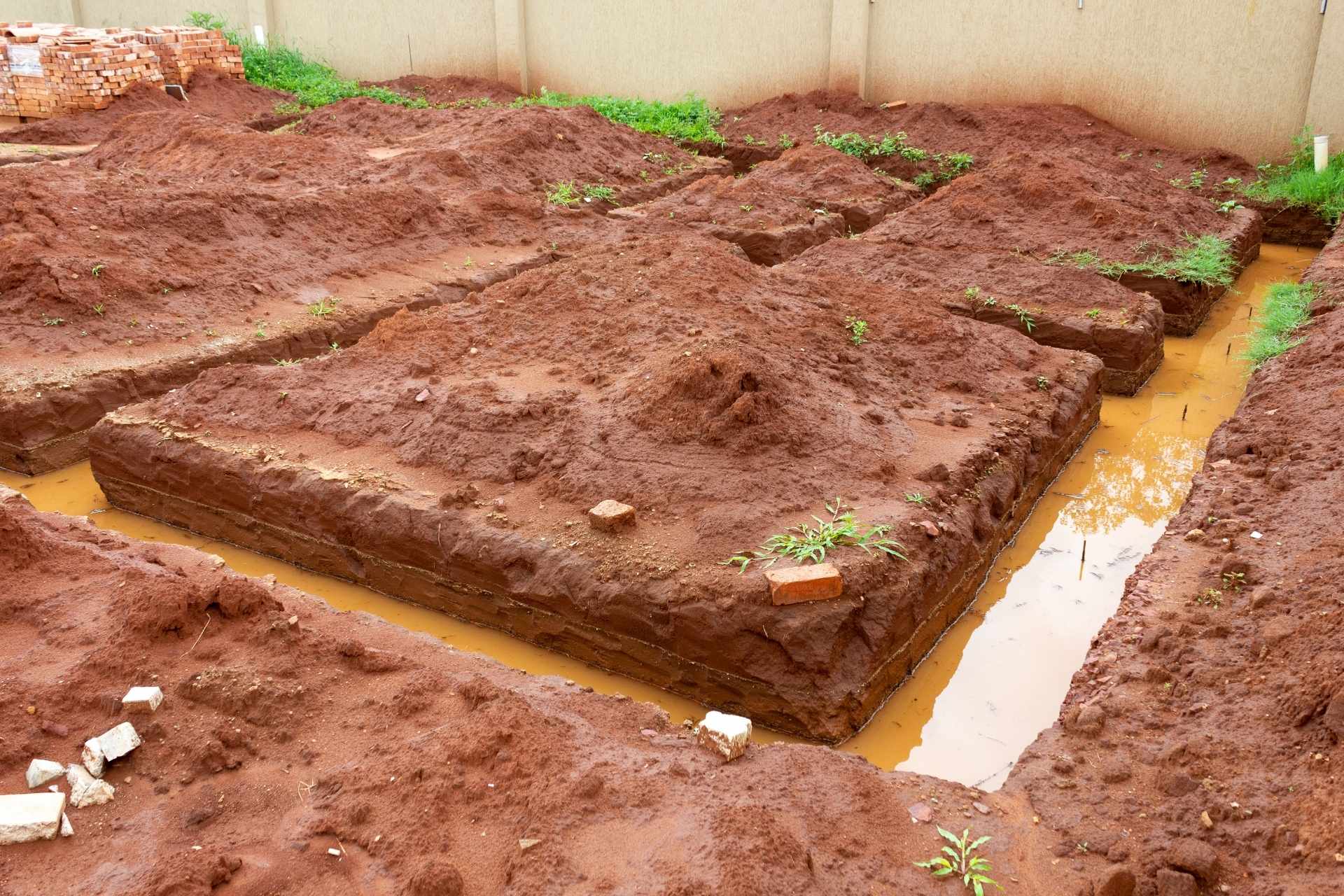
Reactive clay soil, also known as expansive soil Australia-wide, changes volume when moisture levels change. The soil expands when wet and contracts when dry. This movement creates stress beneath slabs, footings, and structures.
In Australia, highly reactive soils are common because many regions contain clay-rich geological formations combined with seasonal moisture variation. Extended dry periods followed by heavy rainfall can increase soil movement significantly.
Common signs of soil reactivity include:
- Cracking in walls or concrete slabs
- Doors and windows sticking
- Uneven floor levels
- Separation around cornices or skirting
- External pavement movement
Soil reactivity is not always visible at the surface. Therefore, we recommend a geotechnical investigation before construction begins, particularly for residential subdivisions, industrial developments, childcare facilities, and commercial projects.
Can I build on reactive clay?
Yes, you can build on reactive clay soil if the site is properly assessed and the footing system is engineered for the ground conditions.
Australian construction standards recognise that expansive soils are common. AS 2870 provides specific guidance for slab and footing design on reactive sites. As a result, most developments can proceed safely with the correct engineering controls in place.
However, problems often occur when:
- Soil testing is incomplete
- Site drainage is poorly managed
- Moisture conditions change after construction
- Footing systems are under-designed
- Trees or landscaping alter soil moisture levels
Early geotechnical assessment reduces these risks and helps prevent costly remediation later.
Start with a Smart Compliance Check
Scope Your Site Requirements in Minutes
Whether you're early-stage or ready to build, this tool helps you work out what reports you need and how to bundle them into a single site visit.
Fast. Free. Custom to your stage.
Start Quick Planning Tool
What Is Site Classification Under AS 2870?
AS 2870 site classification determines how reactive the soil is and guides the required footing design for residential slabs and footings.
The standard classifies sites based on expected ground movement caused by soil moisture changes. A geotechnical engineer or soil testing consultant determines the classification after conducting boreholes, sampling, and laboratory testing.
Common AS 2870 site classifications include:
- Class A – Non-reactive soil
- Class S – Slightly reactive soil
- Class M – Moderately reactive soil
- Class H1/H2 – Highly reactive soil
- Class E – Extremely reactive soil
- Class P – Problem sites requiring specific engineering
What does Class H soil mean?
Class H soil indicates a highly reactive clay site with significant ground movement potential.
Class H sites are common in many Australian residential developments. These soils require engineered footing systems designed to tolerate seasonal expansion and shrinkage. Without suitable design, buildings on Class H soil can experience cracking and structural distortion over time.
In some cases, additional factors may increase site complexity, including:
- Fill material
- Slope instability
- Groundwater
- Existing contamination
- Tree influence zones
Because of this, geotechnical investigations often form part of broader environmental and site assessment programs before development approval or construction.
What Foundation Type Suits Expansive Soils?
The best footing design for expansive soil depends on the site classification, soil profile, moisture conditions, and structural loads.
In Australia, stiffened raft slab systems are commonly used for residential construction on reactive clay sites. These slabs distribute loads more evenly and accommodate ground movement better than conventional shallow footings.
What is a stiffened raft slab?
A stiffened raft slab is a reinforced concrete slab with integrated beams designed to resist soil movement beneath the structure.
These systems are widely used for Class M, H, and E sites because they improve structural performance where soil reactivity exists.
Other footing systems used on reactive sites include:
- Deepened edge beams
- Pier and beam foundations
- Screw piles or bored piers
- Waffle pod slabs
- Suspended slabs for severe ground conditions
The appropriate design depends on:
- Soil reactivity
- Site drainage
- Structural loading
- Groundwater conditions
- Existing fill or uncontrolled material
Importantly, foundation performance also relies on proper site drainage and moisture management after construction. Even well-designed slabs can experience movement if surface water is poorly controlled.
Why Is a Geotechnical Report Important Before Building?
A geotechnical report residential builders rely on provides critical information about soil conditions, reactivity, bearing capacity, and construction risks.
Before building, soil testing helps engineers and designers determine:
- Site classification under AS 2870
- Appropriate footing systems
- Excavation conditions
- Fill requirements
- Drainage considerations
- Potential ground movement risks
Should I get a soil test before building?
Yes, a soil test before building is essential for understanding site conditions and designing suitable foundations.
Without geotechnical testing, footing systems may not match actual soil conditions. This increases the risk of structural damage, delays, and additional construction costs.
At Nova Group Pacific, our investigations support residential, commercial, industrial, and infrastructure projects across Australia. We provide practical recommendations that align with Australian Standards and site-specific construction requirements.
Additionally, geotechnical assessments often integrate with:
This integrated approach improves project efficiency and reduces downstream risk.
How Can You Reduce Problems on Reactive Clay Sites?
Managing reactive clay soil requires both engineering design and long-term moisture control.
Key risk reduction measures include:
- Maintaining consistent soil moisture around the building
- Installing effective site drainage
- Preventing water pooling near slabs
- Managing vegetation near foundations
- Using engineered footing systems
- Following AS 2870 recommendations
Importantly, reactive soil movement cannot be eliminated entirely. However, proper design and site management significantly reduce structural risk and maintenance issues.
Conclusion
Reactive clay soil in Australia presents construction challenges, but it does not prevent safe and successful development. With accurate site classification, professional geotechnical investigation, and properly engineered footing systems, builders and developers can manage expansive soil conditions effectively.
At Nova Group Pacific, we help clients understand site risks early and deliver practical geotechnical and environmental solutions that support compliant, durable construction outcomes.
Speak With Our Geotechnical and Environmental Consultants
If you are planning a residential, commercial, or industrial development on reactive clay soil, our team can help. We provide geotechnical investigations, soil testing, environmental assessments, and practical foundation advice tailored to Australian site conditions.
Contact Nova Group Pacific to discuss your project requirements and arrange a site assessment.
FAQs
Can reactive clay soil cause house cracking?
Yes. Reactive clay soil can cause house cracking when moisture changes create ground movement beneath slabs and footings. Cracks often appear in walls, ceilings, pavements, and brickwork. Proper footing design and moisture management help reduce this risk.
How do I know if my site has reactive soil?
A geotechnical investigation is the most reliable way to determine soil reactivity. Soil testing identifies clay content, moisture behaviour, and site classification under AS 2870. Visual signs alone are not enough to accurately assess expansive soil conditions.
Is Class H soil bad for construction?
Class H soil is not unsuitable for construction, but it requires specialised footing design. Highly reactive soils experience greater movement potential, so slabs and foundations must be engineered to accommodate expansion and shrinkage safely.
What is the best foundation for expansive clay soil?
Stiffened raft slabs are commonly used on expansive clay soil in Australia because they distribute structural loads evenly and resist ground movement. However, the best footing system depends on site classification, soil conditions, and structural requirements.
Why is a soil test important before building?
A soil test before building identifies ground conditions that affect foundation performance, drainage, excavation, and structural design. Without proper testing, construction risks increase significantly, especially on reactive clay sites.