Common Examples of Bonded Asbestos:
- Asbestos cement sheets and pipes
- Asbestos tiles and roofing materials
- Asbestos-containing insulation boards
Risk and Management of Bonded Asbestos:
While bonded asbestos is generally considered less hazardous than friable asbestos, it can still pose risks if it is damaged, deteriorates, or is subject to renovation or demolition. Proper asbestos management and handling procedures, including encapsulation, sealing, and safe removal by licensed professionals, are essential to prevent exposure.
Friable Asbestos
Friable asbestos refers to asbestos-containing materials in a state where they can be easily crumbled or reduced to powder by hand pressure. The materials are typically more deteriorated, damaged, or loosely bound in this form, meaning asbestos fibres are more likely to become airborne, increasing the risk of inhalation and exposure.
Common Examples of Friable Asbestos:
- Asbestos pipe insulation
- Sprayed-on asbestos insulation
- Certain types of asbestos-containing insulation wraps
Risk and Management of Friable Asbestos:
Friable asbestos poses a higher risk of exposure due to its tendency to release fibres when disturbed. As a result, the management of friable asbestos is more challenging and requires strict containment, specialised removal, and abatement procedures to ensure safety.
Understanding the difference between bonded and friable asbestos is crucial in asbestos management, as it determines the level of risk and the appropriate procedures for handling and removal.
Asbestos in Soil
Asbestos can naturally occur in soil due to the erosion of asbestos-containing rocks and materials. Additionally, it may be deposited in soil near sites where asbestos products were manufactured or used. When asbestos is present in soil, there is a potential risk of exposure during construction, excavation, or gardening activities. Disturbing asbestos-containing soil can release airborne fibres, which can be harmful if inhaled.
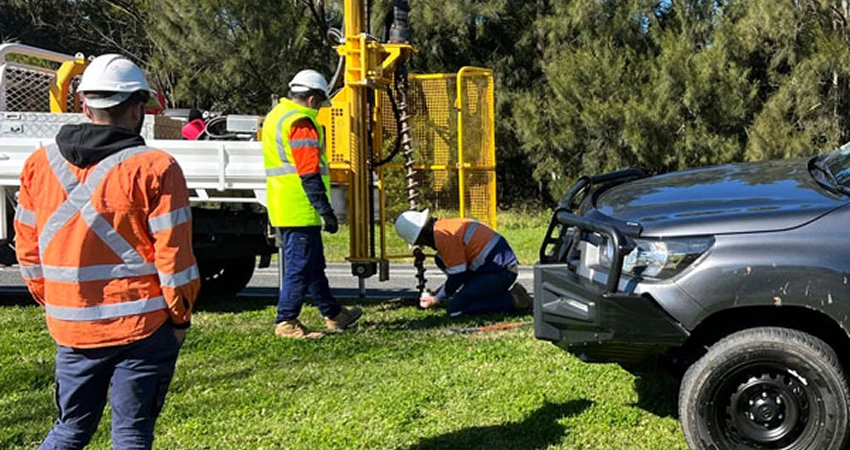
Nova Group Pacific's Environmental Scientists, Occupational Hygienists and SafeWork NSW Licensed Asbestos Assessors are highly experienced in the assessment and management of both bonded and friable asbestos in soils. Our experienced staff can help you from the initial assessment stage, through to remediation and final validation.
Project Experience
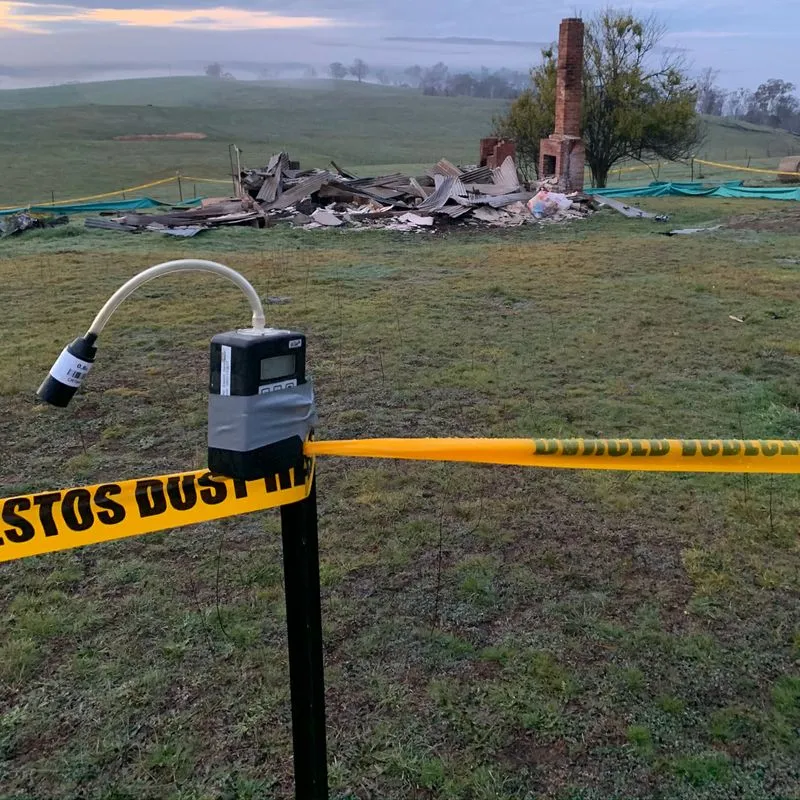
Nova Group Pacific completed the demolition, validation of soil and clearance of fire damaged asbestos containing structures at a private property in western Sydney.
The site also contained extensive illegally imported materials which was under the management of an EPA Clean-up Notice. Nova Group Pacific developed and undertook a Sampling, Analysis and Quality Plan (SAQP) which was endorsed by NSW EPA for the detailed characterisation of the asbestos contamination throughout the imported materials to allow for more cost effective remediation strategy to be implemented. The characterisation works involved the supervision of excavation works, collection of samples for laboratory analysis, data interpretation and reporting.
Asbestos Air Monitoring
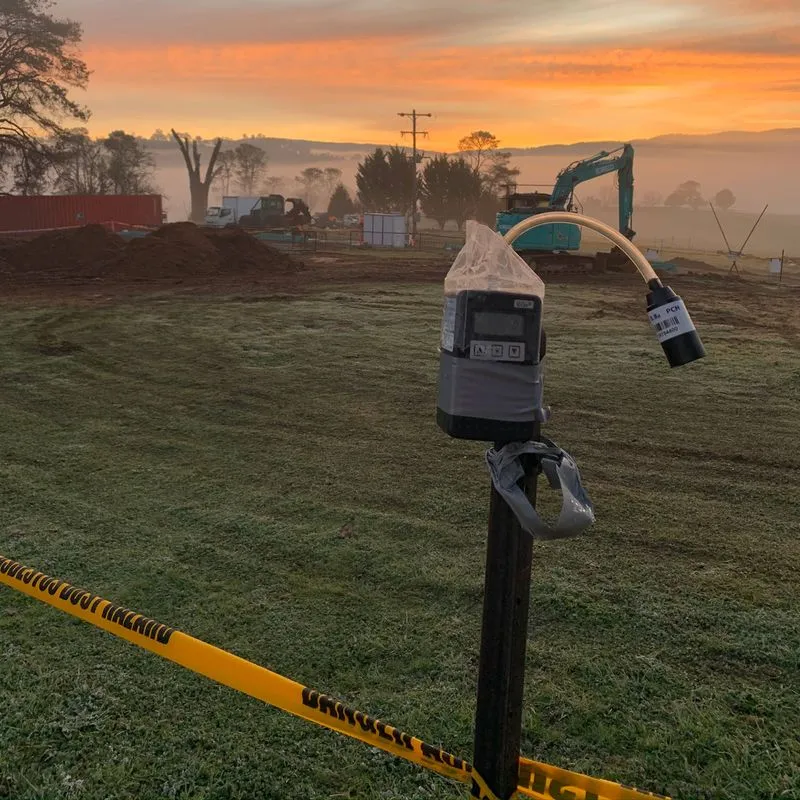
Asbestos air monitoring is a crucial practice in areas where asbestos-containing materials are present or during asbestos removal projects. It involves the collection and analysis of air samples to determine the concentration of asbestos fibres. This monitoring helps ensure compliance with safety regulations and guidelines, providing early detection of asbestos exposure risks. It is commonly employed in construction and demolition projects where asbestos-containing materials are disturbed.
Nova Group Pacific’s SafeWork NSW Licensed Asbestos Assessors can conduct air monitoring both during and after asbestos removal to ensure your home or workplace is free from airborne asbestos fibres. Our experienced staff are also able to manage and supervise the entire asbestos removal process for you and will ensure your project is compliant with all the relevant OH&S requirements.
Asbestos in Buildings and Construction Materials
Asbestos has historically been used in various building materials, including insulation, roofing, flooring, and wallboard. Common examples include asbestos cement sheets, asbestos tiles, and insulation materials. Buildings constructed before the 1980s are more likely to contain asbestos-containing materials. When these materials deteriorate or are disturbed during renovation or demolition, asbestos fibres can become airborne, posing health risks.
Asbestos in Industrial Settings
Industrial facilities often used asbestos in applications like pipe insulation, gaskets, and machinery components. It was favoured for its resistance to heat and fire. Asbestos in industrial settings may still be present in older facilities. Workers in these environments are at risk of exposure, particularly if maintenance or repair work involves asbestos-containing materials.
Asbestos Removal
Asbestos removal is a critical process to eliminate the health hazards associated with asbestos-containing materials. Removing asbestos-containing materials from buildings, industrial settings, and other locations must be carried out by trained and licensed professionals to ensure the safety of both workers and the environment.
The removal process involves containment, careful dismantling of asbestos-containing materials, and proper disposal. Strict safety measures, such as sealing off work areas and wearing appropriate protective gear, are followed to prevent the release of asbestos fibres.
Asbestos removal is subject to strict regulations and guidelines in Australia to safeguard public health. Non-compliance with these regulations can lead to legal consequences.



 CareersArticles