Article Summary
Environmental drilling in urban sites involves collecting soil and groundwater samples in areas with limited access, nearby buildings and potential contamination. It requires low impact drilling methods, strict contamination control and careful planning to meet Australian environmental and work health and safety laws.
What Is Environmental Drilling in Constrained Urban Sites?
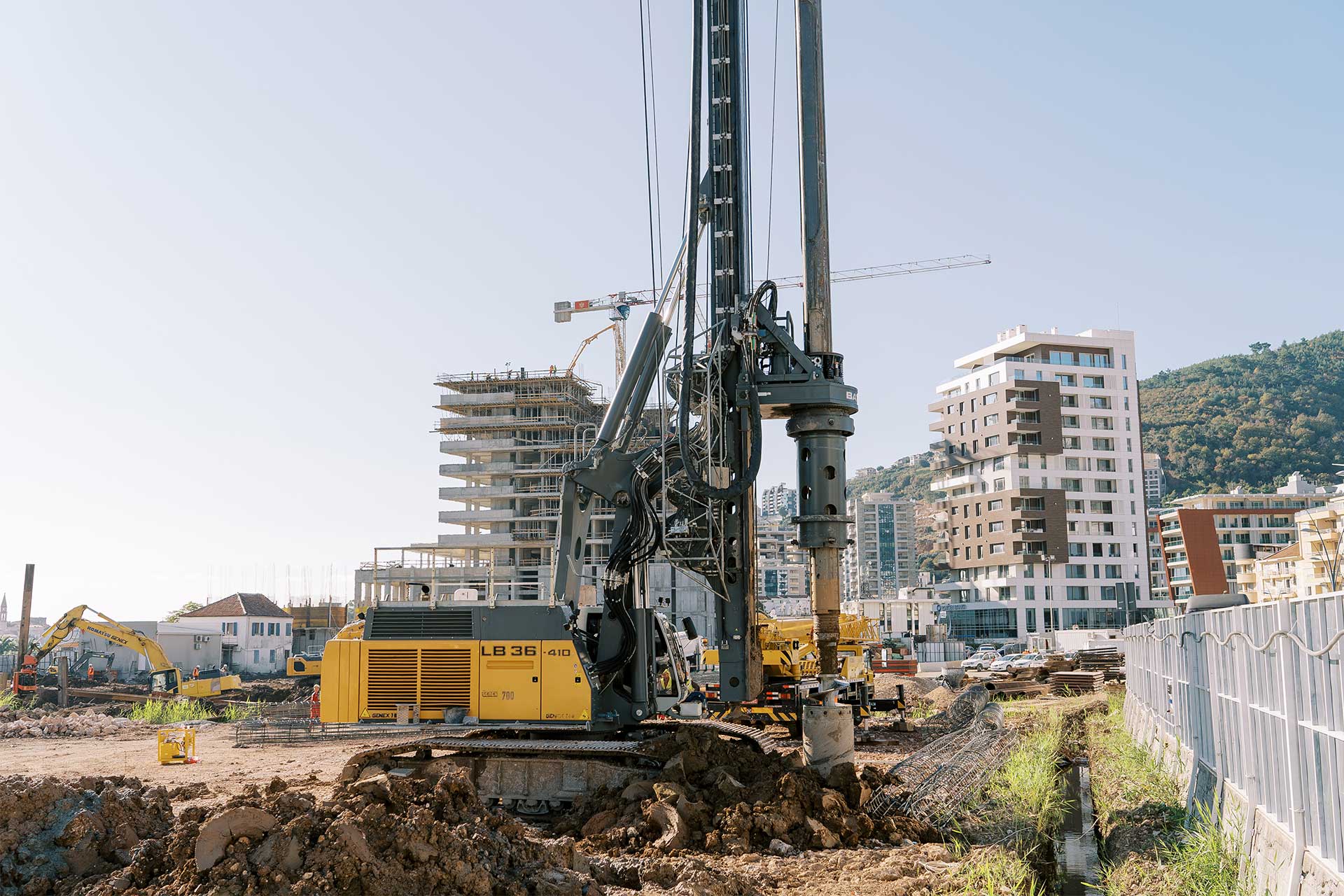
Environmental drilling in urban sites is the process of investigating soil and groundwater conditions in built-up areas where access, space and environmental risks are tightly controlled.
In simple terms, it is drilling carried out:
- In tight spaces such as basements, car parks, footpaths or active industrial sites
- Near existing buildings, services and underground utilities
- On land affected by contamination from past or current activities
These projects demand more than standard drilling. They require careful planning, specialised equipment and strong environmental management systems.
For property developers, councils and industrial operators, this work is critical. It supports:
Why Is Environmental Drilling More Complex in Urban Areas?
Urban sites introduce three core challenges:
- Access constraints
- Contamination control
- The need for low impact drilling
Each of these factors affects how to plan and deliver a compliant investigation.
How To Manage Access Constraints on Constrained Site Drilling Projects?
Access is often the first and biggest challenge.
Limited space and physical barriers
Urban sites commonly involve:
- Narrow laneways
- Low overhead clearances
- Basement car parks
- Active warehouses or factories
- Proximity to neighbouring properties
Standard truck-mounted rigs are often unsuitable. Instead, we use compact and track-mounted rigs that can be:
- Broken down into smaller components
- Moved through doorways or lifts
- Operated in areas with restricted head height
This allows us to complete constrained site drilling safely and efficiently without damaging structures or interrupting operations.
Underground services and utilities
In built environments, underground services are dense and complex. These can include:
- Electrical conduits
- Gas lines
- Sewer and stormwater pipes
- Communications infrastructure
Before any drilling begins, we:
- Review Dial Before You Dig information
- Undertake service location and clearance
- Confirm safe drilling positions
This reduces the risk of service strikes and ensures compliance with work health and safety obligations.
Operating in live environments
Many of our projects occur on active construction sites, operational factories or public land. We coordinate closely with:
- Principal contractors
- Site managers
- Facility operators
- Local councils
Clear communication and staged works help maintain productivity while environmental drilling is underway.
Start with a Smart Compliance Check
Scope Your Site Requirements in Minutes
Whether you're early-stage or ready to build, this tool helps you work out what reports you need and how to bundle them into a single site visit.
Fast. Free. Custom to your stage.
Start Quick Planning Tool
How To Control Contamination During Drilling?
Contaminated land drilling methods must prevent the spread of pollutants. Without proper controls, drilling can:
- Cross-contaminate soil layers
- Create new pathways for contamination
- Expose workers and the public to harmful substances
Contamination control is not optional. It is a core part of best practice and regulatory compliance under Australian state-based environmental protection legislation.
Preventing cross-contamination
When investigating contaminated land, we use strict protocols such as:
- Decontaminating drilling equipment between boreholes
- Using dedicated or disposable sampling tools
- Installing appropriate casing during drilling
These controls help ensure that samples accurately represent site conditions.
Accurate data is essential for:
Managing spoil and waste
Drilling generates soil cuttings and sometimes contaminated groundwater. These materials must be managed in line with waste classification guidelines.
Our approach includes:
- Segregating spoil
- Containing potentially contaminated material
- Transporting and disposing of waste at licensed facilities
This protects surrounding land and waterways and demonstrates due diligence.
Protecting workers and the community
Environmental drilling in urban sites may encounter:
We conduct risk assessments and implement controls such as:
- Air monitoring where required
- Appropriate personal protective equipment
- Exclusion zones and site signage
This safeguards workers, site occupants and neighbouring properties.
What Are Low Impact Drilling Methods?
Low impact drilling refers to techniques and equipment designed to minimise disturbance to:
- Buildings and infrastructure
- Site operations
- Surrounding communities
- The environment
In dense urban settings, this approach is essential.
Compact and modular rigs
Low impact drilling often involves smaller, purpose-built rigs that:
- Produce less vibration
- Reduce noise
- Limit surface damage
These rigs are ideal for:
- Schools and childcare centres
- Aged care facilities
- Hospitals
- Commercial office sites
For secondary audiences such as facility managers and insurers, this means investigations can proceed without major disruption.
Targeted borehole design
Rather than excessive drilling, we design focused investigation programs based on:
- Conceptual site models
- Historical land use
- Regulatory requirements
This reduces unnecessary disturbance while still achieving robust data.
Minimal surface restoration
In urban areas, surfaces may include:
- Concrete slabs
- Asphalt car parks
- Paved public areas
We plan borehole locations and reinstatement works to ensure surfaces are:
- Repaired to a safe and compliant standard
- Returned to functional use as quickly as possible
This is particularly important for councils, developers and industrial operators managing time and cost pressures.
How Does Environmental Drilling Support Development and Compliance?
Environmental drilling urban sites programs are rarely standalone tasks. They form part of a broader compliance and risk management framework.
For developers and investors, drilling supports:
- Due diligence prior to acquisition
- Development consent conditions
- Environmental management plans
For industrial and manufacturing clients, it helps:
- Demonstrate compliance with environmental licences
- Assess legacy contamination
- Inform remediation strategies
For councils and government bodies, it provides:
- Evidence-based land assessments
- Protection of public health and the environment
- Alignment with state environmental protection authority guidelines
As environmental consultants, we integrate drilling with detailed site investigations, remediation action plans and ongoing monitoring programs.
This end-to-end capability ensures the investigation data directly informs practical and compliant outcomes.
Partner With Experienced Environmental Drilling Consultants
Environmental drilling in constrained urban sites demands precision, planning and regulatory knowledge. It is not simply a technical exercise. It is a risk management tool.
At Nova Group Pacific, we combine:
- Experienced environmental scientists and engineers
- Specialised low impact drilling capability
- Strong understanding of contaminated land regulations
We work closely with developers, councils, industrial operators and facility managers to deliver reliable data with minimal disruption.
If you are planning a development, managing contaminated land or responding to regulatory requirements, speak with our team. We can design and deliver a compliant, efficient and low impact drilling program tailored to your site.
Contact Nova Group Pacific today to book a consultation and ensure your project proceeds with confidence.