








Introduction
Construction sites near waterways, drainage lines or sensitive catchments in NSW often carry a development consent condition requiring water quality monitoring. This monitoring tracks whether runoff, dewatering discharge or sediment-laden water leaving the site threatens downstream water quality. A single exceedance can trigger regulatory action. Repeated failures put a project's environmental licence and reputation at risk.
This article explains when water quality monitoring becomes a consent requirement and which parameters get tracked. It also covers what happens when results breach a trigger level and how project teams can avoid repeat non-compliance.
What Is Water Quality Monitoring During Construction?
Water quality monitoring during construction measures the condition of water leaving or moving through a site. Earthworks, excavation and dewatering can all affect this condition while they remain underway. Consultants sample surface water at defined points, often where site runoff enters a drain, creek or stormwater system. They then compare results against trigger levels set in the development consent or environmental protection licence.
This differs from a one-off baseline water sample. Monitoring runs for the duration of construction activities that could affect water quality. This ongoing approach builds a dataset regulators can review if a complaint or exceedance arises.
When Is Water Quality Monitoring Required Under Development Consent Conditions?
Consent authorities commonly attach water quality monitoring conditions to developments near creeks, rivers, wetlands or stormwater infrastructure. Development consent conditions for larger or more sensitive projects often specify sampling locations, parameters, frequency and trigger levels in detail.
Projects that disturb large areas of soil, involve dewatering or sit within a declared catchment area face a higher chance of this condition. Bulk earthworks, subdivision developments, linear infrastructure projects and sites near sensitive ecological receptors commonly carry it too. Where a Construction Environmental Management Plan (CEMP) already governs the site, water quality monitoring usually sits within that broader document. It rarely stands alone as a separate requirement. Confirming these obligations early, during CEMP development, helps avoid gaps once construction starts.
What Parameters Does Water Quality Monitoring Track?
Programs typically focus on three core parameters. Consultants choose these because they respond quickly to construction activity and correlate closely with downstream environmental harm.
Turbidity
Turbidity measures water cloudiness, caused mainly by suspended sediment particles. Construction earthworks are the most common source of elevated turbidity on a site, since exposed soil washes into drainage lines during rainfall. Regulators usually watch this parameter most closely, because sediment-laden water can smother aquatic habitat downstream.
pH
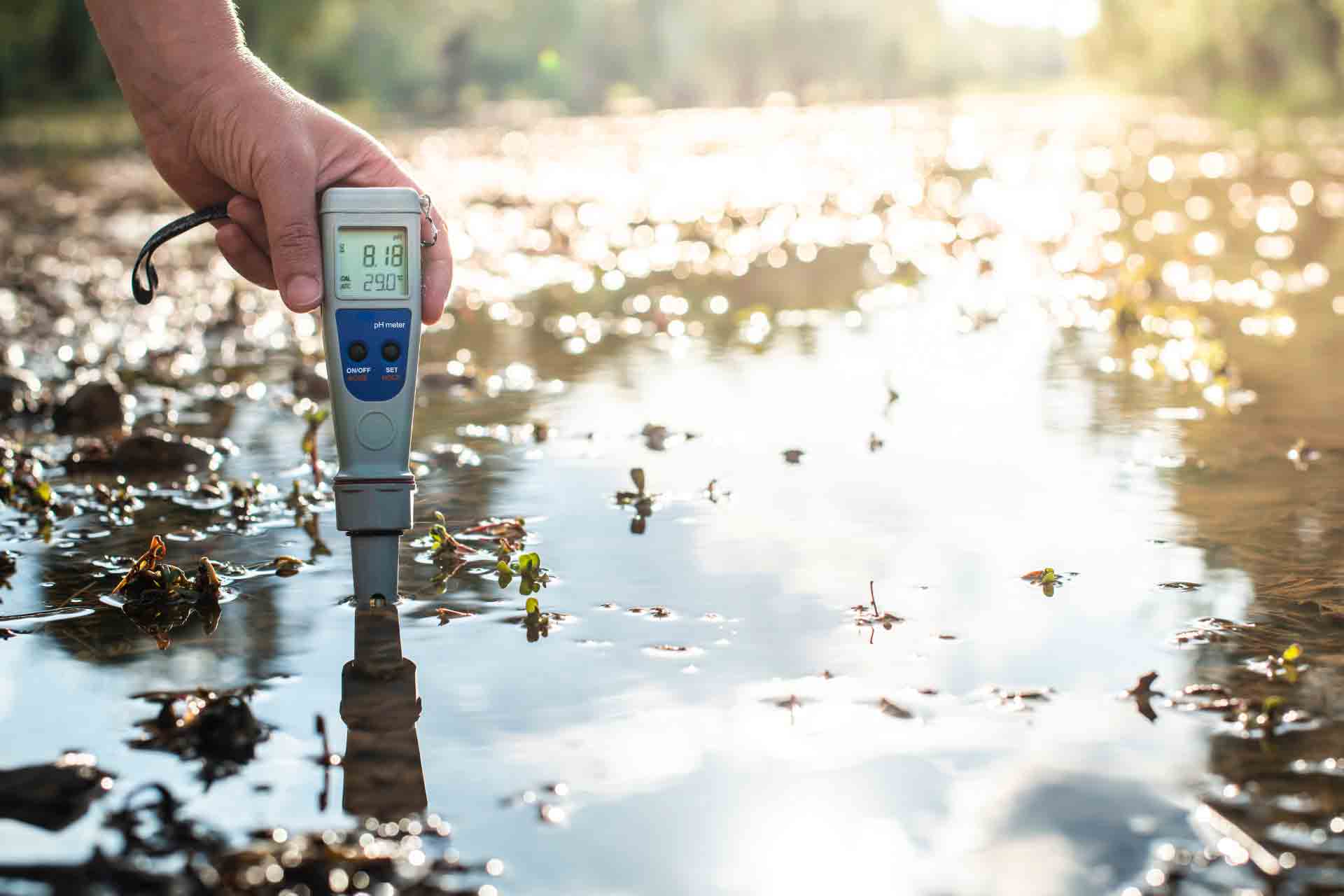
pH measures how acidic or alkaline the water is. Concrete works, acid sulfate soils and certain dewatering activities can shift pH outside a waterway's natural range. Extreme pH values can harm aquatic life even where sediment levels stay low.
Suspended Solids
Total suspended solids measure the actual mass of particulate matter in a water sample, complementing the turbidity reading. Regulators often set trigger levels for both parameters together, since they can behave differently depending on particle size and water chemistry.
What Trigger Levels Apply to Water Quality Monitoring?
Trigger levels are usually set against background or ambient water quality, rather than as a single fixed number that applies everywhere. A common approach compares downstream results to an upstream or background sample. It then flags an exceedance where the difference surpasses a specified percentage or absolute value.
Development consent conditions, environmental protection licences or a project's Construction Environmental Management Plan generally set these thresholds. Sediment and erosion controls along haul roads and site perimeters play a large role in keeping results under these levels. They intercept sediment before it reaches a drainage line or waterway.
What Happens When a Water Quality Exceedance Occurs?
An exceedance typically triggers a defined response process under the project's Construction Environmental Management Plan. This usually starts with an immediate investigation of the cause. Corrective action to control the source and additional monitoring to confirm the issue has resolved generally follow.
Regulators may also require incident notification, particularly where the exceedance is significant or repeated. Handling this well through structured environmental incident management can limit the regulatory and reputational fallout. Left unaddressed, repeated exceedances can escalate into a formal environmental compliance audit, fines or, in serious cases, a stop-work order.
How Can Construction Projects Avoid Repeat Compliance Failures?
Most repeat failures trace back to the same root causes. Erosion and sediment controls sometimes go unmaintained. Monitoring doesn't always happen consistently, and a site team may not fully understand what triggered the original exceedance. These gaps show up again and again.
Reviewing the challenges typical of urban construction sites helps project teams anticipate where controls are most likely to fail. Regular inspection of erosion and sediment controls reduces this risk considerably. Prompt maintenance after rain events and clear escalation procedures for site staff matter just as much. Dewatering activities deserve particular attention, since poorly managed discharge is a common repeat-offender source on active construction sites.
Why Is Professional Water Quality Monitoring Important?
Designing a monitoring program that satisfies a consent condition takes more than placing a few sample points around a site. Consultants need to understand catchment hydrology and background water quality. They also need a clear view of how construction activities on this specific site are likely to affect it.
Professional monitoring gives project teams an early warning system too. Catching a trend before it becomes an exceedance is far cheaper, and far less disruptive, than responding to a breach after the fact.
Conclusion
Water quality monitoring protects waterways from the sediment, altered pH and other impacts that construction activity can cause. Understanding when a consent condition requires monitoring, and which parameters and trigger levels apply, helps developers plan for it rather than react to it.
An exceedance doesn't have to escalate into a serious compliance failure. Prompt investigation, corrective action and well-maintained erosion and sediment controls usually resolve the issue quickly. Getting the monitoring program right from the start remains the most reliable way to avoid repeat breaches and the regulatory attention that comes with them.
At Nova Group Pacific, we design and run water quality monitoring programs that meet development consent and licence requirements across Australia. Our team also supports broader environmental compliance needs, from CEMP development through to incident response. Contact us to discuss your project.


