
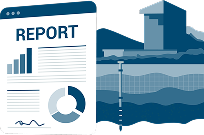






Environmental risk assessment is the process of identifying and evaluating potential risks to human health and the environment arising from site conditions, contamination or project activities.
It supports informed decision-making across site investigations, development, construction and remediation projects by helping determine how environmental risks should be avoided, controlled, monitored or managed.
An environmental risk assessment is a structured process used to identify environmental hazards, evaluate their potential consequences and determine the level of risk they may pose to human health, ecosystems, property or the surrounding environment.
The assessment considers factors such as the source of a hazard, how people or the environment could be exposed, who or what may be affected and the likelihood and consequence of that exposure.
The findings can then be used to determine whether further investigation, remediation, environmental controls or ongoing monitoring is required.
Environmental risk assessment supports environmental compliance, informed project planning and effective risk management.
Environmental risk assessments may consider hazards associated with:
Identifying these hazards early helps project teams understand potential environmental constraints before development, construction or remediation progresses.
Identifying a hazard alone does not determine the level of environmental risk.
An environmental risk assessment may also consider:
Understanding the relationship between the source, pathway and receptor helps determine whether a credible risk exists and what controls may be appropriate.
Depending on the project, environmental risk assessment may be undertaken with consideration of:
Risk assessment may form part of broader processes including Preliminary Site Investigations (PSIs), Detailed Site Investigations (DSIs), contaminated land assessments and environmental management planning.
The findings of an environmental risk assessment can inform:
This allows environmental risks to be addressed proportionately throughout the project lifecycle.
Effective environmental risk assessment can help reduce the likelihood of:
It provides an evidence-based framework for determining what environmental management measures may be required.
Environmental risk assessment may be required or recommended at different stages of a project, particularly where contamination, sensitive receptors or potential environmental impacts are identified.
Risk assessment may form part of:
These assessments can help identify potential environmental liabilities, determine whether further investigation is required and inform decisions about property acquisition, development or site management.
Environmental risks may need to be assessed during planning for:
The level of assessment required will depend on the site, proposed development, jurisdiction and applicable approval requirements.
Environmental risk assessment is particularly relevant where contamination has been identified or is suspected.
Assessment may consider:
The findings can inform the development of a Remediation Action Plan (RAP) and subsequent remediation, validation and site management requirements.
Environmental risk assessment can also support construction planning by identifying potential impacts associated with:
Identified risks can then be addressed through a Construction Environmental Management Plan (CEMP) and appropriate monitoring and control measures.
Environmental risk assessment may also be undertaken following:
The assessment can help determine the potential impact, immediate controls and whether further investigation, remediation or monitoring is required.
Nova Group Pacific provides environmental assessment, investigation and risk management services for development, construction and remediation projects across Australia.
Our multidisciplinary team can assist with:
By integrating environmental risk assessment with investigation, remediation and environmental management services, Nova Group Pacific can help clients understand site constraints and establish practical pathways for managing environmental risk.
Start with a smart compliance check: Scope your site requirements in minutes.
Identify the environmental investigations, assessments and management measures your project may require before development or construction progresses.
For project-specific advice, contact Nova Group Pacific to discuss your site conditions, environmental risks and project requirements.
Develop a deeper understanding of environmental risk assessment and its role within environmental investigation and management:
Together, these concepts provide a framework for identifying environmental hazards, evaluating potential impacts and implementing appropriate investigation, management, remediation and monitoring measures.
Whether you need site assessment, remediation, or environmental consulting, our expert team is here to guide your project from planning to completion with precision and care.
Whether you're early-stage or ready to build, this tool helps you work out what reports you need — and how to bundle them into a single site visit.
Fast. Free. Custom to your stage.


We provide sustainable contaminated land, remediation, and geotechnical consulting services across Australia.


